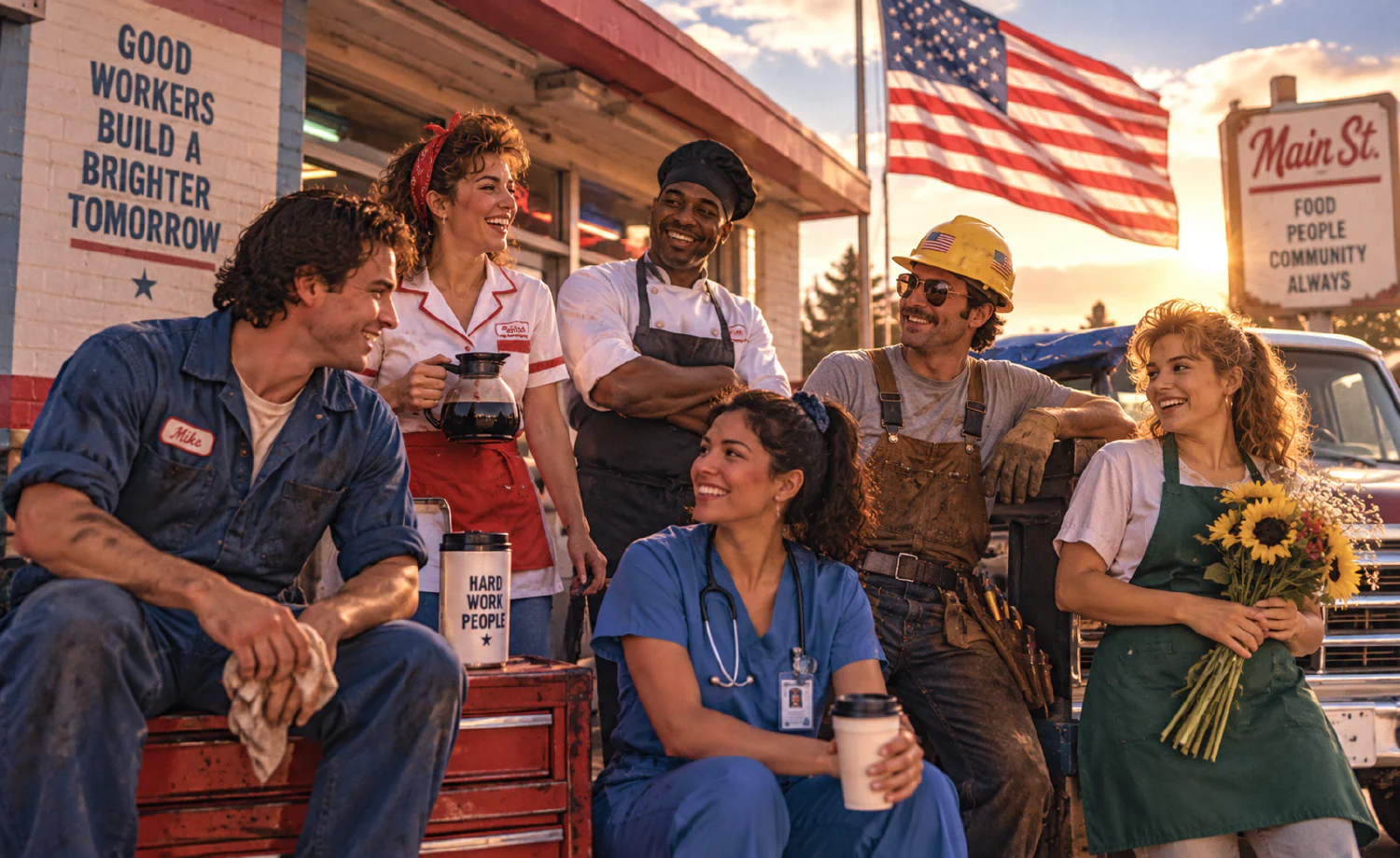
Labor Day wasn't invented for mattress sales, backyard burgers, or one last three-day weekend before summer disappears.
It was created to recognize American workers.
The first Labor Day was celebrated in New York City on September 5, 1882. According to the U.S. Department of Labor, some 10,000 workers took unpaid time off to march from City Hall through Manhattan, then gathered with their families for a picnic, speeches, and — this part checks out — a concert.
The idea caught on fast. States started declaring their own Labor Day holidays — Oregon first, in 1887 — and within a few years more than half the country had one. Then in the summer of 1894, the Pullman railroad strike shut down rail traffic across the country and put the treatment of American workers on every front page. Congress moved quickly: that June, it made the first Monday in September a federal holiday, and President Grover Cleveland signed it into law.
At the time, American workers were pushing for better working conditions, fairer wages, and more reasonable hours. Labor Day gave the country a chance to recognize the people whose work helped build its strength and prosperity.
So Why Do We Have Labor Day?
Because work matters.
And the people doing it matter, too.
Of course, today we celebrate with cookouts, football, sales, and a day away from the office. Unless you work in a restaurant, retail store, hotel, healthcare facility, salon, gym, or pretty much anywhere else that has to stay open. For the roughly 80 million hourly workers in America, a holiday is often just a shift with better cookout smells.
Then somebody still has to make the schedule.
That's where Cloxbi comes in — holiday coverage, shift swaps and time-off requests in one place, so the manager working the holiday isn't also refereeing the group chat.
Happy Labor Day to the people who make everything run.
And to the managers making the schedule? We've got you.
Scheduling shouldn't suck.